Synthetic ingredients might promise quick fixes, but beneath the surface, they can undermine your skin’s natural resilience - especially on your hardworking feet. Many conventional foot care products rely on artificial fragrances, parabens, petrochemicals, and other synthetics that can disrupt your skin barrier, trigger irritation, or even cause long-term harm.
At The Feats, we believe your skin deserves better: science-backed, natural solutions that work with your body, not against it. Our research shows that synthetic additives often mask symptoms rather than address root causes, leaving skin vulnerable to dryness, sensitivity, and infection.
By choosing products free from unnecessary chemicals and toxins, you’re not just avoiding potential risks - you’re actively supporting your skin’s health, comfort, and ability to recover from daily stresses. We’re here to champion your movement with honest, high-integrity care - because your feet deserve protection that’s as natural and resilient as you are.

What’s Really in Conventional Foot Care?
Hidden Hazards
Many mainstream foot care products are packed with synthetic ingredients - like parabens, artificial fragrances, petrochemicals, and sulphates - that may do more harm than good. These additives are often included to extend shelf life, create appealing scents, or improve texture, but they can disrupt your skin’s natural defences and trigger irritation, allergies, or even hormone disruption. Artificial fragrances are a leading cause of contact dermatitis, while parabens and phthalates have been linked to endocrine disruption and increased skin sensitivity. Petrochemicals and sulphates can strip away essential oils, weakening the skin barrier and leaving feet vulnerable to dryness and infection. By understanding what’s really in conventional formulas, you can make more informed choices that prioritise your skin’s health and long-term resilience. [1][2][3]

Undermining Your Skin’s Natural Balance
How Synthetics Disrupt
Synthetic ingredients can interfere with the delicate ecosystem of your skin, stripping away protective oils, altering pH, and weakening the barrier that keeps irritants out and moisture in. Harsh chemicals like sulphates and petrochemicals can leave skin dry, tight, and more prone to cracking, while preservatives and artificial fragrances may trigger inflammation or allergic reactions. Over time, this disruption makes your feet less resilient to daily stresses, increasing the risk of blisters, infections, and chronic discomfort. Supporting your skin’s natural balance means choosing products that nourish and protect, rather than compromise, your body’s first line of defence. [2][3][4]

Beyond Surface-Level Irritation
Long-Term Effects
The consequences of synthetic ingredients often extend far beyond immediate redness or itching. Prolonged exposure to parabens, phthalates, and petrochemicals can weaken your skin’s barrier, disrupt its natural repair processes, and increase susceptibility to chronic dryness, sensitivity, and even fungal or bacterial infections. Over time, these effects can compromise your feet’s resilience, making it harder for your skin to recover from daily wear and tear. By avoiding unnecessary synthetics, you help safeguard your skin’s long-term health and maintain comfort and protection with every step. [1][2][5]

The Case for Natural, Science-Backed Alternatives
Choosing Better
Opting for natural, evidence-backed ingredients means supporting your skin’s health without unnecessary risks. Plant-based oils, botanical extracts, and mineral powders work in harmony with your skin’s natural processes - nourishing, protecting, and aiding recovery without disrupting its delicate balance. Scientific research shows that natural formulations can be just as effective, if not more so, than their synthetic counterparts, offering antimicrobial, anti-inflammatory, and moisturising benefits while minimising irritation and long-term harm. By choosing products rooted in nature and validated by science, you empower your feet to stay resilient, comfortable, and ready for every challenge. [6][7][8]
Synthetic Ingredients FAQs
Why are synthetic ingredients used in many foot care products?
Synthetic ingredients are commonly included in foot care products to extend shelf life, create uniform textures, and add strong fragrances that appeal to consumers. They’re often cheaper and easier to manufacture at scale than natural alternatives. However, these benefits for manufacturers don’t always translate to benefits for your skin, and some synthetics can actually undermine your skin’s natural resilience and health over time. [1][2]
What risks do synthetic ingredients pose to my skin?
Synthetics like parabens, artificial fragrances, sulphates, and petrochemicals can disrupt your skin’s natural barrier, leading to dryness, irritation, and increased sensitivity. Some, such as parabens and phthalates, have been linked to hormone disruption and allergic reactions, while others may strip away essential oils, making your skin more vulnerable to infection and long-term damage - especially on hard-working and active feet. [1][2][3]
How can I tell if a product contains harmful synthetic ingredients?
To spot potentially harmful synthetics, carefully read the ingredient list on your product packaging. Look for terms like parabens (e.g. methylparaben, propylparaben), phthalates, sulphates (SLS/SLES), artificial fragrances (“parfum”), and petrochemicals (like mineral oil or petrolatum). These are commonly used in conventional foot care and are often associated with skin irritation or barrier disruption. [1][2][3]
Are natural ingredients always safer than synthetic ones?
Not all natural ingredients are automatically safe, but evidence-backed botanicals and minerals tend to be gentler and more compatible with your skin’s biology. Natural ingredients like plant oils and extracts can nourish, protect, and repair without the harsh side effects often linked to synthetics. The key is choosing products that use well-researched, high-quality natural ingredients proven to support skin health. [6][7][8]
How do The Feats products avoid the risks of synthetics?
The Feats is committed to formulating every product with only natural, science-backed ingredients - completely free from parabens, artificial fragrances, sulphates, and petrochemicals. By focusing on gentle, effective botanicals and minerals, The Feats supports your skin’s natural defences, reduces the risk of irritation, and helps maintain long-term foot health, even for the most active lifestyles. [6][7][8]
Collapsible content
Scientific sources
- Rastogi, S. C., et al. (2007). Fragrance allergens in cosmetic products - a survey. Contact Dermatitis, 56(5), 289-293. Surveys the prevalence of fragrance allergens in cosmetics and their role in causing skin irritation and allergic reactions. Link
- Darbre, P. D., & Harvey, P. W. (2008). Paraben esters: review of recent studies of endocrine toxicity, absorption, esterase and human exposure, and discussion of potential human health risks. Journal of Applied Toxicology, 28(5), 561-578. Reviews the evidence linking parabens to endocrine disruption, skin sensitivity, and potential long-term health risks. Link
- Ananthapadmanabhan, K. P., et al. (2004). Cleansing without compromise: the impact of cleansers on the skin barrier and the role of moisturizers. Dermatologic Therapy, 17(s1), 16-25. Examines how detergents and harsh cleansers can strip the skin barrier, leading to dryness and increased vulnerability to irritation. Link
- Korting, H. C., & Braun-Falco, O. (1996). The effect of detergents on skin pH and its consequences. Clinics in Dermatology, 14(1), 23-27. Explores how detergents and synthetic surfactants alter skin pH and disrupt the skin’s natural balance, increasing the risk of irritation. Link
- Levin, J., & Maibach, H. I. (2008). The correlation between transepidermal water loss and percutaneous absorption: an overview. Journal of Controlled Release, 128(3), 192-199. Discusses how a compromised skin barrier from synthetic exposure increases water loss and susceptibility to external irritants and infections. Link
- Lin, T. K., Zhong, L., & Santiago, J. L. (2018). Anti-inflammatory and skin barrier repair effects of topical application of some plant oils. International Journal of Molecular Sciences, 19(1), 70. Reviews the benefits of plant oils in reducing inflammation, supporting barrier repair, and improving skin hydration. Link
- Draelos, Z. D. (2011). Botanicals and botanically derived ingredients in dermatology: uses, benefits, and challenges. Dermatologic Therapy, 24(5), 463-469. Reviews the use of botanicals in dermatology, highlighting their benefits and the importance of evidence-backed natural ingredients. Link
- Pazyar, N., et al. (2012). A review of applications of tea tree oil in dermatology. International Journal of Dermatology, 51(7), 784-790. Summarises the antimicrobial and anti-inflammatory properties of tea tree oil, supporting its use in natural skin care formulations. Link
Time To Try Natural
-
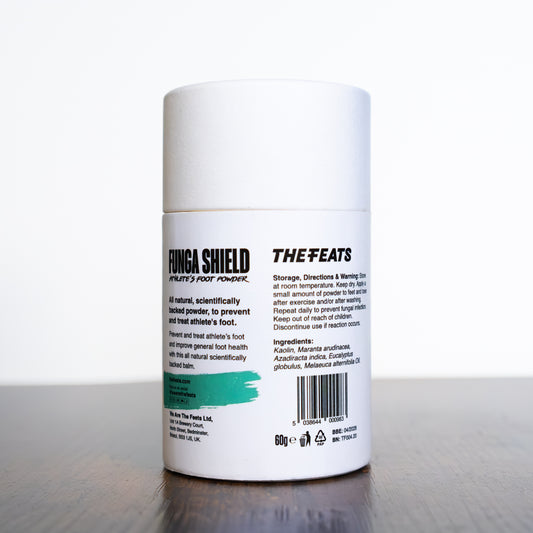
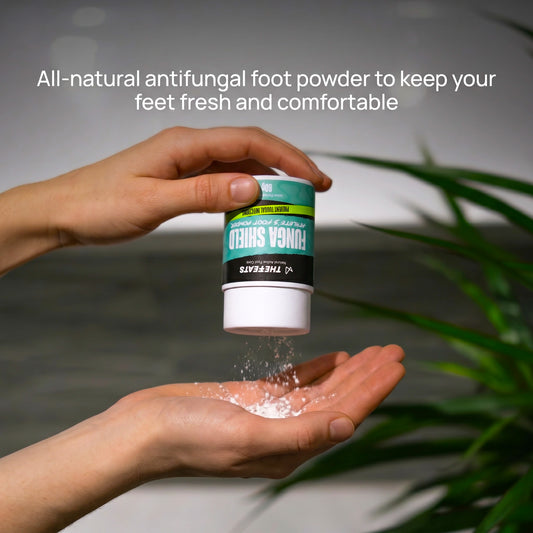
Funga Shield Athlete's Foot Powder
Regular price From £10.99Regular priceUnit price per£32.97Sale price From £10.99Sale -
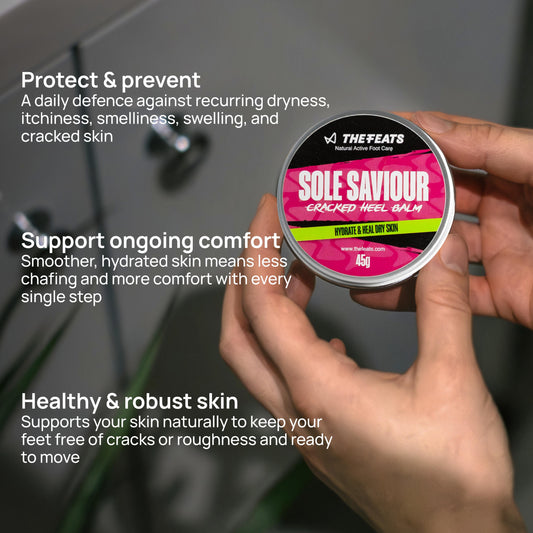
Sole Saviour Cracked Heel Balm
Regular price From £13.99Regular priceUnit price per£41.97Sale price From £13.99Sale -
Bounce Back Muscle Balm
Regular price From £10.99Regular priceUnit price per£32.97Sale price From £10.99Sale -
Chafe Guard Anti Chafe Balm
Regular price From £16.49Regular priceUnit price per£49.47Sale price From £16.49Sale -
The Ultra Performance Stack Foot Care Set
Regular price £32.99Regular priceUnit price per£40.67Sale price £32.99Sale -
Foot Care Starter Kit - Treat & Prevent
Regular price £29.99Regular priceUnit price per£35.97Sale price £29.99Sale -
The Anti-Fungal Bundle
Regular price £20.99Regular priceUnit price per£24.98Sale price £20.99Sale