The skin is the largest organ of the body, playing a massive role in health and wellbeing. It acts as the body’s interface with the outside world, as well as providing shape and structure to the body. It protects the body and its internal organs from microorganisms, UV irradiation, allergens and irritants.
When playing sport or undertaking strenuous activities the skin on the feet and legs plays a critical role (and takes a beating). It is in contact with the outside world, whilst being asked to enable the movement of feet and lower limbs without breaking or causing other discomfort. In summary, it is a marvel of the human body and its upkeep and health is vital to top physical performance.
And let’s be clear, we’re not talking about beauty or appearance. Instead, we focus on functional, practical solutions aimed at preventing the common problems active people combat every day in their training and exercise.

Your Body’s First Line of Defence
The Skin Barrier
Your skin barrier, known as the stratum corneum, is a sophisticated shield made of tightly packed cells and natural lipids. It acts as your body’s frontline defence, protecting against bacteria, pollutants, and moisture loss. When this barrier is healthy, your skin stays hydrated, smooth, and resilient, but when it’s compromised - by harsh chemicals, friction, or even over-washing - it can become dry, irritated, and more prone to infection. Maintaining a strong skin barrier is essential for overall skin health, especially for active feet that face daily stress and exposure. [1][2]

How Skin Heals and Adapts
Renewal and Repair
Skin is a living, dynamic organ that constantly renews itself. New cells are generated in the deeper layers and gradually move to the surface, replacing older cells that are shed. This renewal cycle, typically around 28 days, is vital for keeping skin smooth and healthy.
When skin is damaged - by blisters, cuts, or irritation - a complex repair process kicks in, involving cell regeneration and collagen production. Supporting this natural renewal and repair with nourishing, evidence-backed ingredients helps your skin recover faster and adapt to the demands of an active lifestyle. [3][4]

The Impact of Activity and Environment
Skin Under Stress
Everyday movement, exercise, and environmental exposure put your skin under constant stress. Friction from shoes, repetitive motion, sweat, and changes in temperature or humidity can all disrupt the skin barrier, leading to irritation, blisters, and increased risk of infection. Even seemingly minor factors, like harsh soaps or pollution, can tip the balance.
Understanding how these stressors affect your skin is crucial for choosing care that not only soothes and protects but also helps your skin stay resilient and comfortable through every challenge. [5][6]

The Power of Natural Ingredients
Supporting Skin Health
Natural ingredients - such as plant oils, botanical extracts, and mineral powders - offer powerful benefits for skin health. Unlike many synthetic additives, these ingredients work in harmony with your skin’s natural processes, providing antimicrobial, anti-inflammatory, and moisturising effects.
Scientific studies show that natural formulations can help repair the skin barrier, reduce irritation, and support healing without causing long-term harm. By choosing evidence-backed, natural care, you give your skin the support it needs to stay healthy, resilient, and ready for whatever your day brings. [7][8]
Skin Science FAQs
What is the skin barrier and why is it important for foot health?
The skin barrier is the outermost layer of your skin, made up of cells and natural lipids that protect against bacteria, moisture loss, and environmental irritants. For feet, a strong barrier is essential to prevent dryness, cracking, and infection - especially if you’re active or on your feet all day. [1][2]
How does physical activity affect the skin on my feet?
Movement, friction, and sweat can stress the skin, breaking down its barrier and making it more prone to blisters, chafing, and fungal infections. That’s why The Feats products are formulated to support recovery, reduce irritation, and reinforce your skin’s natural defences. [5][6]
Why does The Feats avoid synthetic ingredients in its products?
Synthetic additives like parabens, artificial fragrances, and petrochemicals can disrupt your skin’s natural balance, causing irritation or long-term harm. The Feats uses only evidence-backed, natural ingredients to nourish, protect, and repair your skin without unnecessary risks. [7][8]
How do natural ingredients support skin renewal and repair?
Natural oils, botanical extracts, and minerals work with your skin’s biology to hydrate, soothe inflammation, and promote cell regeneration. This helps your feet recover faster from daily stresses and keeps your skin resilient and comfortable. [3][7][8]
Can The Feats products help with issues like athlete’s foot or cracked heels?
Yes - our formulations are designed to address real foot care needs, from preventing fungal infections with antimicrobial botanicals to deeply hydrating and repairing cracked skin. Every ingredient is chosen for its proven benefits in supporting healthy, active feet. [8]
Collapsible content
Scientific sources
- Elias, P. M. (2005). Stratum corneum defensive functions: an integrated view. Journal of Investigative Dermatology, 125(2), 183-200.
Explains how the stratum corneum acts as a physical and biochemical barrier, preventing water loss and protecting against external threats. Link - Proksch, E., Brandner, J. M., & Jensen, J. M. (2008). The skin: an indispensable barrier. Experimental Dermatology, 17(12), 1063-1072. Reviews the structure and function of the skin barrier, highlighting its role in hydration, defence, and overall skin health. Link
- Sorg, H., Tilkorn, D. J., Hager, S., Hauser, J., & Mirastschijski, U. (2017). Skin wound healing: An update on the current knowledge and concepts. European Surgical Research, 58(1-2), 81-94. Discusses the phases of skin wound healing, including cell regeneration and collagen synthesis, and the importance of supporting these processes for recovery. Link
- Madison, K. C. (2003). Barrier function of the skin: “la raison d’être” of the epidermis. Journal of Investigative Dermatology, 121(2), 231-241. Explores the renewal cycle of the epidermis and its critical role in maintaining barrier function and skin health. Link
- Denda, M., Tsuchiya, T., Elias, P. M., & Feingold, K. R. (2000). Stress alters cutaneous permeability barrier homeostasis. American Journal of Physiology-Regulatory, Integrative and Comparative Physiology, 278(2), R367-R372. Demonstrates how physical and environmental stressors can impair the skin barrier, increasing susceptibility to irritation and infection. Link
- Korting, H. C., & Braun-Falco, O. (1996). The effect of detergents on skin pH and its consequences. Clinics in Dermatology, 14(1), 23-27. Examines how detergents and harsh cleansers disrupt skin pH and barrier function, leading to irritation and barrier breakdown. Link
- Lin, T. K., Zhong, L., & Santiago, J. L. (2018). Anti-inflammatory and skin barrier repair effects of topical application of some plant oils. International Journal of Molecular Sciences, 19(1), 70. Reviews the benefits of plant oils in reducing inflammation, supporting barrier repair, and improving skin hydration. Link
- Pazyar, N., et al. (2012). A review of applications of tea tree oil in dermatology. International Journal of Dermatology, 51(7), 784-790. Summarises the antimicrobial and anti-inflammatory properties of tea tree oil, supporting its use in natural skin care formulations. Link
Support Your Skin
-
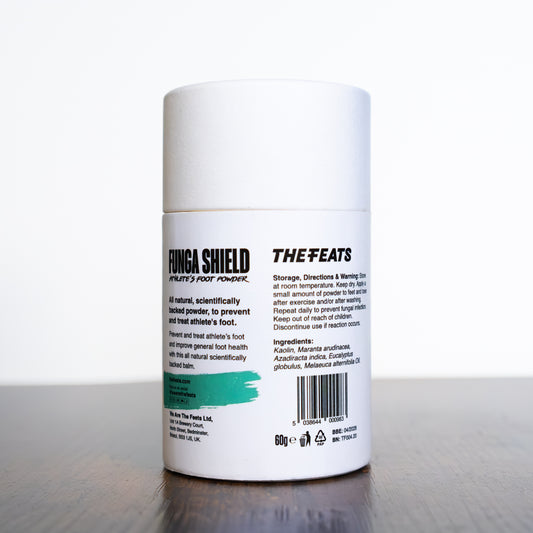
Funga Shield Athlete's Foot Powder
Regular price From £10.99Regular priceUnit price per£32.97Sale price From £10.99Sale -
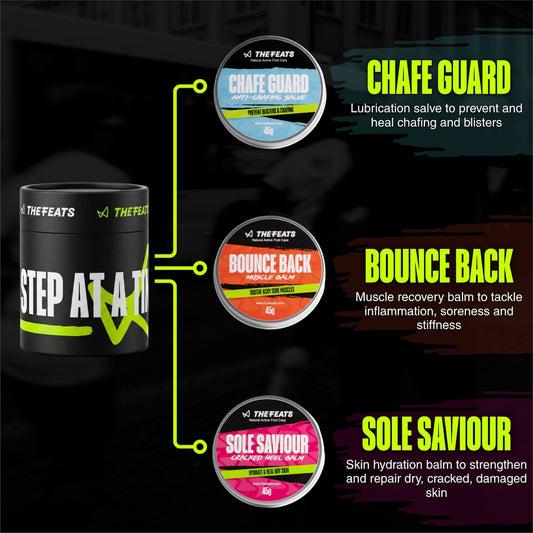
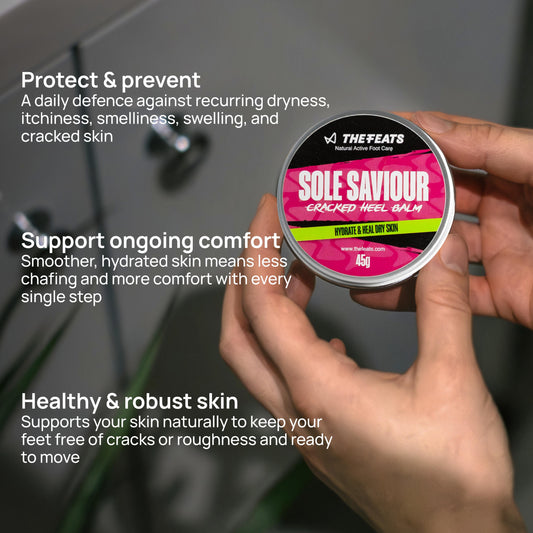
Sole Saviour Cracked Heel Balm
Regular price From £13.99Regular priceUnit price per£41.97Sale price From £13.99Sale -
Bounce Back Muscle Balm
Regular price From £10.99Regular priceUnit price per£32.97Sale price From £10.99Sale -
Chafe Guard Anti Chafe Balm
Regular price From £16.49Regular priceUnit price per£49.47Sale price From £16.49Sale -
The Ultra Performance Stack Foot Care Set
Regular price £32.99Regular priceUnit price per£40.67Sale price £32.99Sale -
Foot Care Starter Kit - Treat & Prevent
Regular price £29.99Regular priceUnit price per£35.97Sale price £29.99Sale -
The Anti-Fungal Bundle
Regular price £20.99Regular priceUnit price per£24.98Sale price £20.99Sale